Effortless Winter to Spring Transition Outfits: What to Wear Between Seasons
Outfits
The move from winter to spring often feels confusing when it comes to getting dressed. Mornings can be cold enough for heavy layers, while afternoons suddenly feel warm and uncomfortable. This change makes choosing the right outfit harder than expected. One wrong choice, like a thick sweater or heavy coat, can leave you feeling uncomfortable halfway through the day.
This in-between season can be frustrating, but it is also one of the best times to experiment with style. Learning how to layer properly is not just about staying warm or cool. It is about building outfits that feel thoughtful and well put together. Effortless Winter to Spring Transition Outfits for 2026 are less about fast fashion trends and more about balance, comfort, and flexibility.
This season focuses on a style often described as soft utility. It blends practical clothing with gentle, romantic details. High-quality basics are paired with lighter fabrics and soft prints. The result is a wardrobe that works across changing temperatures while still looking stylish and intentional.
If you want outfits that carry you from late winter mornings to warm spring afternoons, this guide breaks everything down in a clear and simple way.
—
## Why This Look Works
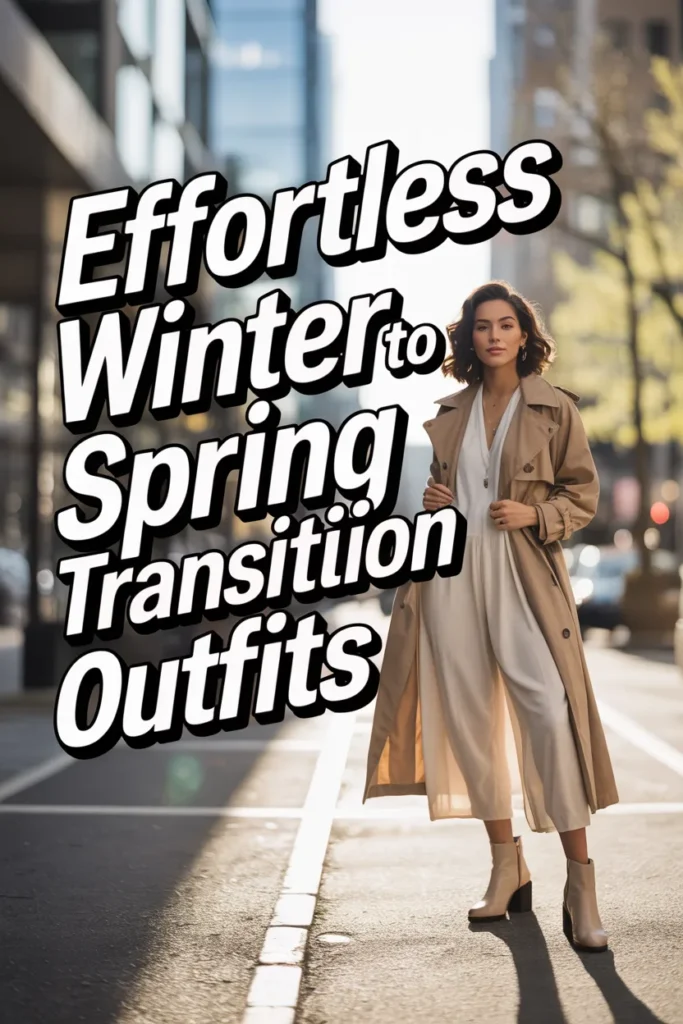
Transitional dressing is a skill because it requires balance. The outfits in this guide are not random pieces thrown together. Each item works with the others to create looks that adapt easily to changing weather. Textures, shapes, and layers are chosen carefully so everything feels connected.
These Effortless Winter to Spring Transition Outfits focus on clothing that can be added or removed throughout the day without ruining the overall look. This makes getting dressed less stressful and more reliable during unpredictable weather.
—
### The Art of Texture Mixing
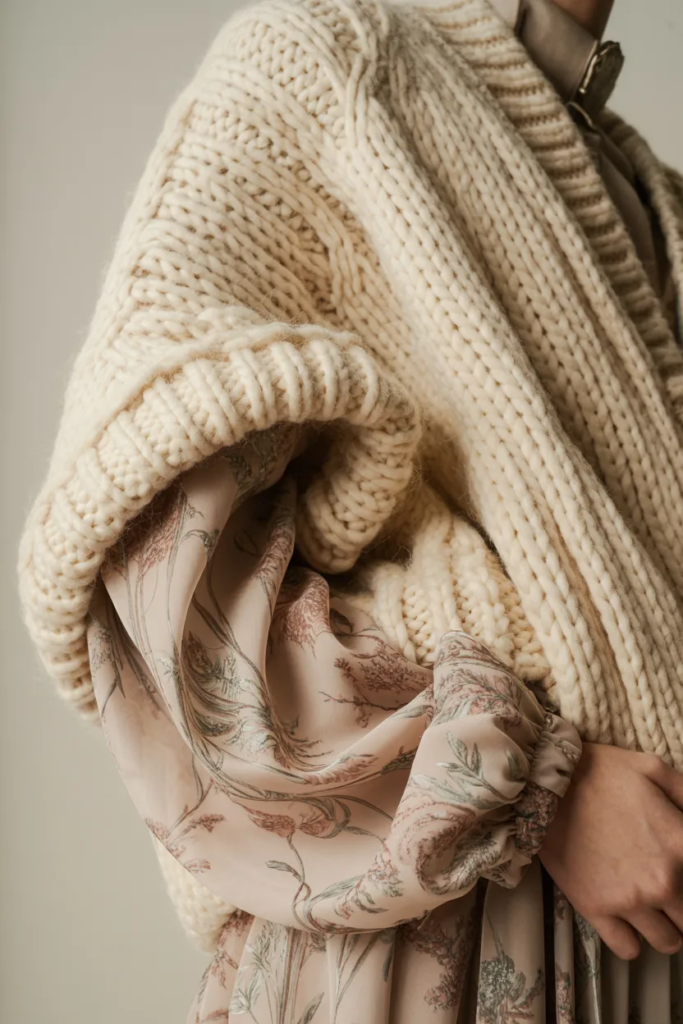
One of the main reasons this style works so well is the mix of heavy and light fabrics. Combining a thick, cozy crewneck with a flowing midi dress creates contrast that feels natural for this season. The outfit does not look too winter-heavy or too spring-ready.
When outfits use only winter knits, they feel too warm and closed off. On the other hand, wearing only light spring fabrics can feel out of place when the air is still cold. Mixing textures sends a clear message that your outfit is planned and suits the season you are in.
—
### Strategic Layering & The “Third Piece” Rule
Layering becomes more effective when you follow the “third piece” rule. This rule means an outfit feels complete only after adding a third item beyond the main top and bottom. In this guide, pieces like a trench coat or a denim jacket fill that role.
A trench coat adds structure and helps smooth out layered outfits underneath. It keeps the look clean even when wearing casual clothing. A denim jacket, on the other hand, softens dressier pieces and makes them feel relaxed and wearable for everyday moments. These layers give outfits flexibility while keeping them polished.
—
### Color Theory: Anchoring with Neutrals
Color plays a big role in successful winter to spring outfits. Winter shades are usually dark and deep, while spring brings lighter tones. To connect these two seasons, neutral colors work best as a base.
Shades like beige, camel, medium blue, and white can be worn all year. These colors allow brighter or softer accents, such as floral prints or scarves, to stand out without overpowering the outfit. Using neutrals creates a smooth flow between seasons and makes mixing pieces easier.
—
## The Capsule Breakdown: 7 Key Pieces
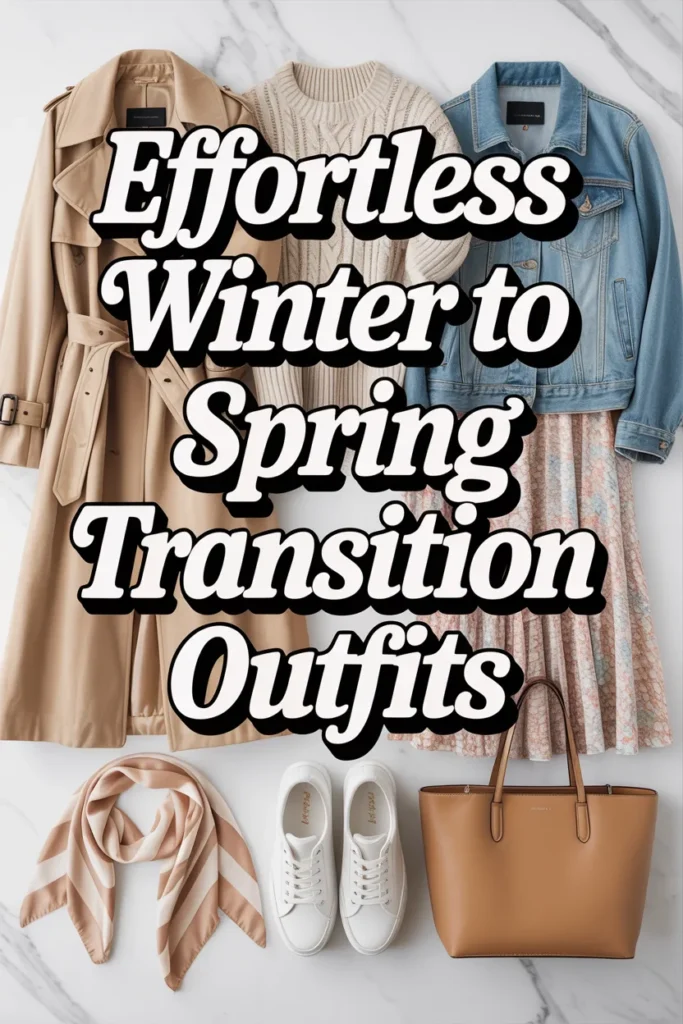
This capsule focuses on timeless cuts, useful fabrics, and items that last beyond one season. Each piece serves a clear purpose and works with the rest of the wardrobe.
—
### The Modern Classic Trench
**Why you need it:**
A trench coat protects against cool winds and light rain while instantly making an outfit look more refined.
**Style Note:**
Neutral shades like beige or camel are the most flexible. A classic double-breasted design with a tie belt creates shape and allows you to adjust the fit easily. The belt should be long enough to tie naturally for a relaxed but polished look.
—
### The Textured Crewneck
**Why you need it:**
This piece offers warmth without feeling bulky, making it ideal for unpredictable temperatures.
**Style Note:**
Look for thick textures such as cable knit or ribbing. These details add depth to simple outfits. Slightly relaxed shoulders and thick cuffs give it a modern feel and make it easy to style with jeans or layered over dresses.
—
### The Vintage Wash Layer (Denim Jacket)
**Why you need it:**
A denim jacket helps tone down dressier items and adds texture to outfits.
**Style Note:**
A medium blue wash with light fading feels more relaxed and spring-ready. Silver buttons and working pockets keep the jacket practical while still looking fresh.
—
### The Day-to-Night Midi
**Why you need it:**
This dress signals the shift into spring and works across different times of day.
**Style Note:**
Soft floral prints add a romantic touch. Features like a tiered skirt and light sleeves allow movement and comfort, making the dress suitable for both casual and dressier moments.
—
### The Silk-Blend Accent Scarf
**Why you need it:**
A scarf protects your neck from cool breezes while adding color near your face.
**Style Note:**
Square or rectangular scarves offer more styling options. Semi-sheer fabrics with subtle patterns bring personality into neutral outfits without overpowering them.
—
### The Minimalist Leather Trainer
**Why you need it:**
Comfort is essential during busy days, and these shoes deliver comfort without losing style.
**Style Note:**
A slim, low-top shape works well with both dresses and trousers. Clean white leather or faux leather keeps the look simple and modern.
—
### The City Carry-All
**Why you need it:**
As the day warms up, you need space to carry extra layers.
**Style Note:**
Structured tote bags hold their shape and keep outfits looking professional. Smooth or lightly textured leather with minimal hardware works best for daily use.
—
## Final Thoughts
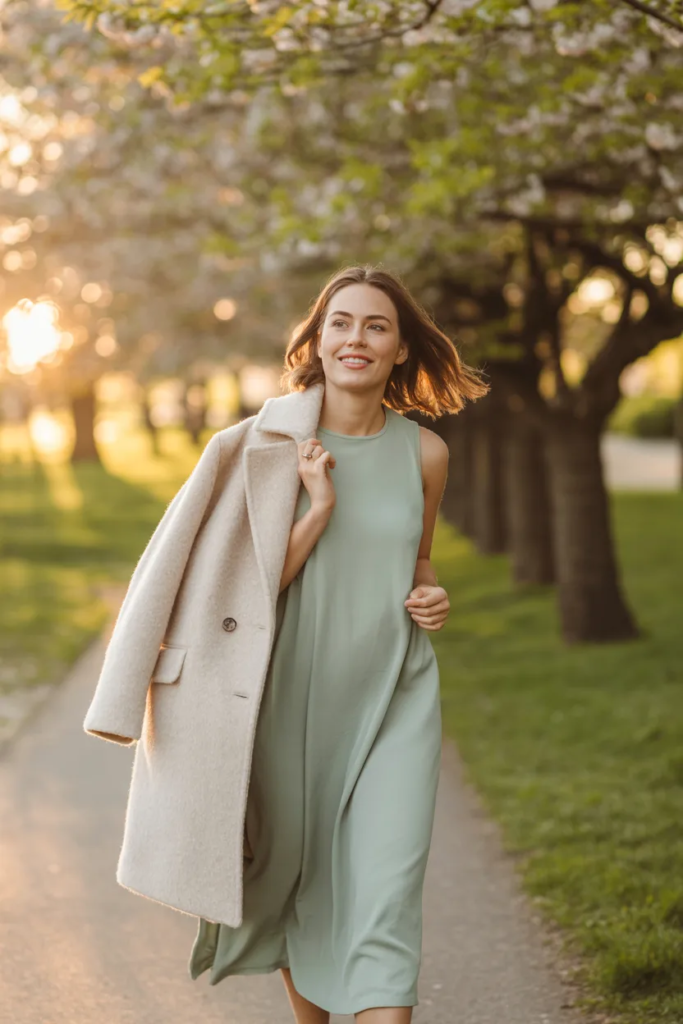
Building Effortless Winter to Spring Transition Outfits does not require replacing your entire wardrobe. With a small group of reliable pieces, you can create many outfits that adjust easily throughout the day. The key is flexibility—being able to layer up in the morning and lighten your look by afternoon.
—
### 3 Foolproof Outfit Formulas
Once you have the core pieces, putting together outfits becomes simple.
—
#### Formula 1: The Office Commute
**The Combo:** Midi Dress + Trench Coat + Leather Trainers + Tote
**The Vibe:** Clean and practical. The trench adds structure, while the trainers keep the commute comfortable.
—
#### Formula 2: Weekend Brunch
**The Combo:** Textured Crewneck + Denim Jacket + Dark Denim Jeans + Silk Scarf + Leather Trainers
**The Vibe:** Relaxed and cozy. Draping the jacket instead of fully wearing it keeps the outfit balanced and comfortable.
—
#### Formula 3: The “Soft Utility” Mix
**The Combo:** Midi Dress + Crewneck layered on top + Trench Coat
**The Vibe:** Warm and creative. Layering the sweater over the dress turns it into a skirt while keeping the shape defined.
—
### Bonus: Caring for Your Transitional Pieces
Since these items will be worn often, caring for them helps extend their life. Steaming trench coats preserves their shape better than ironing. Removing pills from knitwear keeps it looking fresh. Regularly cleaning white sneaker soles helps maintain a clean, intentional look.
Effortless Winter to Spring Transition Outfits are all about smart choices, balance, and confidence. With these key pieces and simple formulas, you can move through the season comfortably while staying stylish.
—